
 Find Your location




Table of Contents
In winter, many homes in colder regions like Canada suffer from poor indoor air quality. While central heating systems keep your home warm and comfortable, the warm air can sometimes seem stale, particularly in newer homes built to be airtight.
Many homeowners install HRV, heat recovery ventilator systems in their furnace ducts. These devices remove stale indoor air and supply fresh outdoor air, keeping homes comfortable and well-ventilated.
In this article, we dive deep to give a detailed answer to the question “what is an HRV system?” Keep reading to find out more about this essential for modern homes, and learn how it works with your furnace and air conditioning units to keep your home comfortable throughout the year.
What Does the HRV System Do?
Put simply, an HRV system draws in fresh, outdoor air and vents stale air from inside the house. These ventilation systems help to maintain indoor air temperature and improve air quality by removing pollutants, excess moisture, bad odours, and carbon monoxide.
HRV units boost the efficiency of HVAC systems by recovering heat as they exchange stale indoor air with fresh outdoor air. In winter, the HRV uses heat from the warm air inside to preheat fresh, outdoor air as it enters the home. In summer, the HRV works with air conditioners to do the reverse, pre-cooling incoming fresh air by removing heat and transferring it to the outgoing stale air. For this reason, some people refer to an HRV as an air-to-air heat exchanger.
Measuring for Total Ventilation Requirements
An HRV’s capacity is based on your home’s total ventilation requirements. To know which ventilator works for your home, calculate the ventilation rate.
Get the total ventilation rate by adding the ventilation units of all rooms in the house. Generally, a primary bedroom and unfinished basement require 10 litres per second (L/s) of fresh air, while other rooms need 5 L/s. If you have six rooms–a primary, two bathrooms, a kitchen, living room, and basement—your home requires 40 litres of fresh air per second. Use this data when shopping for an HRV to ensure your requirements are met.

How an HRV, Heat Recovery Ventilator, Maintains Balance
HRV systems help maintain a stable, comfortable temperature in your home,and help balance airflow, humidity, and air pressure. By controlling humidity levels and preventing air pressure imbalances, an HRV helps protect the home from condensation and structural damage.
Heat recovery ventilators maintain balanced airflow by ensuring that the amount of air expelled from the home matches the fresh air brought in, preventing issues like drafts and moisture problems. It also filters incoming air, removing dust, excess moisture in humid air, and allergens to improve indoor air quality.
It’s important to consult with HVAC technicians to help you determine the right number of vents to achieve balanced ventilation. Regular maintenance, like cleaning filters and ducts, is also essential for the system to continue functioning effectively.
How a Heat Recovery Ventilator Works
How do heat recovery ventilators heat homes in the winter, filter out pollutants and dust, and eliminate humidity? Let’s look more closely at how these units work to find out more about their impressive performance and benefits.
- The intake draws fresh air from outside the house and directs it to an insulated supply duct line.
- A filter removes pollutants from incoming fresh air before it enters the heat exchange core. The core preheats the air.
- The circulation fan distributes the air throughout the house via the ducts.
- Meanwhile, the exhaust duct draws in stale or humid inside air.
- The dry air passes through a filter and enters the heat exchange core where heat is transferred to the incoming air.
- The exhaust air outlet vents the stale air, and the cycle repeats.
Air Distribution: Direct Duct vs Forced-Air Furnace System
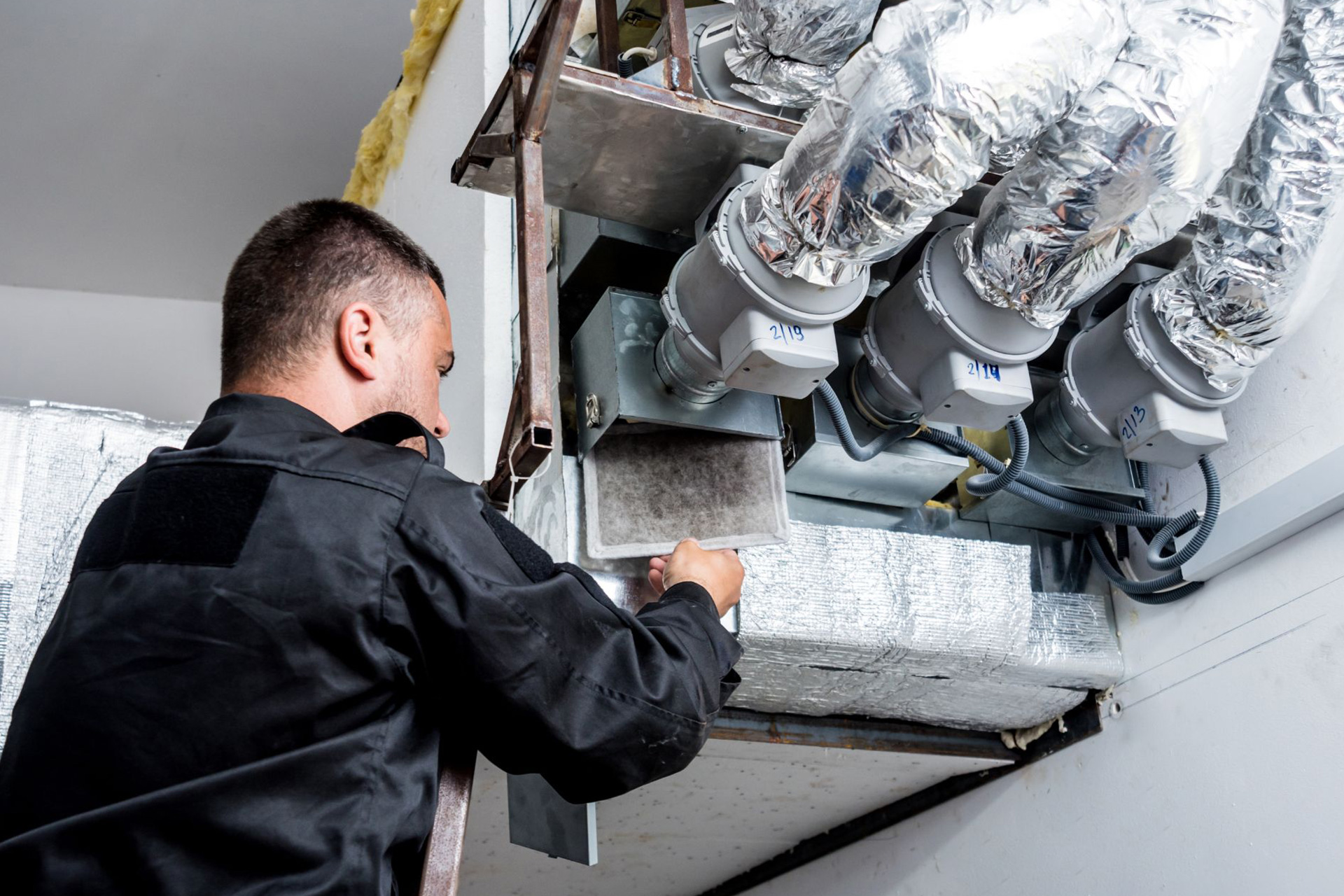
When installing an HRV, HVAC contractors can install HRV in two ways: by adding new ductwork for the ventilation device, or by connecting to the existing ductwork of a forced-air furnace system.
Direct Duct Installation
Direct duct installation is the common choice for homes using electric baseboards, hot water, or radiant heating. In this method, contractors install HRV ductwork with lines directed to rooms with high footprints, such as bedrooms, living rooms, and dining areas. As for kitchens, laundry, and other rooms with high moisture content, experts place exhaust air ducts to remove moist air.
Forced Air Furnace System Addition
For homes with a forced-air furnace system, HVAC technicians connect the HRV to the furnace’s main return air duct. Any incoming air enters the furnace before the ductwork system distributes it throughout the house.
If you’re unsure what installation method should be used, consult a licensed technician. They can thoroughly inspect your home and advise you on the best option for your situation.
Install an HRV Today With LG Home Comfort
So what is an HRV system? It’s a great option to improve the indoor air quality, energy efficiency, and comfort in your home. These benefits are easy to experience for yourself with high-quality installation and maintenance services from LG Home Comfort, HVAC solutions experts in Canada.
At LG Home Comfort, your comfort is our priority. With exclusive partners, 24/7 emergency support, and same day/next day services, you can trust our team of licensed professionals with all of your HVAC systems needs. Leave your HRV system set up to us!
Connect with us today, and you’ll breathe fresh air in no time!

HVAC Tips & Updates
Get seasonal maintenance reminders

Why Choose Us
-

4.9/5.0 Rating
500+ Reviews
-

Licensed & Insured
Fully Certified
-

Award Winning
2025 Excellence
Search Articles



 1-866-438-5442