
 Find Your location



Table of Contents
So, your air conditioner has chosen the hottest day of the year to go on vacation. Typical. Before you start Googling “emergency AC repair near me” or turning your freezer into a sauna, take a deep breath — preferably near a fan — and read on.
Whether you live in Kitchener, Cambridge, Mississauga, or anywhere else across Ontario, this guide will walk you through practical steps to troubleshoot a non-working air conditioner. We’ll cover everything from common causes and quick fixes to when it’s time to call your local HVAC professionals.
First: Don’t Panic (Yet)
When your central AC stops working, there’s usually a logical reason — and in many cases, a fix that doesn’t require you to remortgage your house. But before diving into the wires and filters, start with the most obvious culprits.
-
Check the Thermostat — Yes, Seriously
It might sound too simple, but one of the most common reasons for AC failure is a thermostat set to the wrong mode or temperature.
Checklist:
- Is it set to Cool and not Heat?
- Is the temperature lower than the current room temp?
- If it’s a programmable or smart thermostat, are the batteries dead?
- Is the screen on? If not, try a reset or battery replacement.
Faulty thermostat? Time to consider upgrading to a smart thermostat in Ontario for better control and efficiency.
-
Flip the Breaker, But Do It Safely
Sometimes, the issue isn’t your AC — it’s your electrical panel. If your air conditioner won’t turn on, it could be a tripped circuit breaker. Your system often has separate breakers for the indoor and outdoor units.
What to do:
- Locate your main breaker panel.
- Check for any switches in the Off position or ones that look misaligned.
- Reset the breakers, but don’t keep flipping them if they trip again — that’s a sign you need professional help.
💡 Pro tip: Breakers that keep tripping may point to a faulty capacitor or overloaded motor.
-
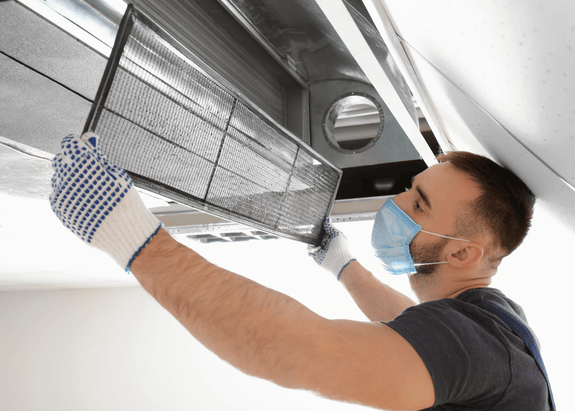
Filter Failures: The Dirty Little Culprit
When was the last time you checked your air filter? (Be honest.) A clogged air filter can shut down your AC system, cause ice buildup, or just make it run like it’s breathing through a pillow.
Signs of a dirty air filter:
- Weak airflow from vents
- Ice on indoor evaporator coils
- Rising electricity bills
- Furnace or air handler overheating
Fix: Replace it. Seriously. It costs a few bucks and can save you hundreds. Make it a habit — every 1 to 3 months, depending on usage and filter type, whether you have pets or other lifestyle factors.
-
Look for Ice, But Don’t DIY De-Ice
Frozen coils are a classic symptom of airflow restriction or low refrigerant levels. If you spot frost or ice on the indoor or outdoor unit, do not take a hairdryer to it.
Do this instead:
- Turn the AC off completely
- Set the fan to ON to circulate warm air and melt the ice
- Leave the unit off for a few hours
- Call an HVAC technician if ice returns
📌 Possible causes include refrigerant leaks, dirty coils, or blower issues — all of which need expert diagnosis.
-
Head Outside: Inspect the Condenser Unit
Ontario summers don’t just cook your skin — they cook your outdoor unit too. Your condenser needs proper airflow to do its job.
What to check:
- Clear away leaves, grass, and debris
- Make sure there’s 2 feet of clearance around the unit
- Look for damaged fins or signs of rodent mischief
- Gently hose down the coils with low-pressure water
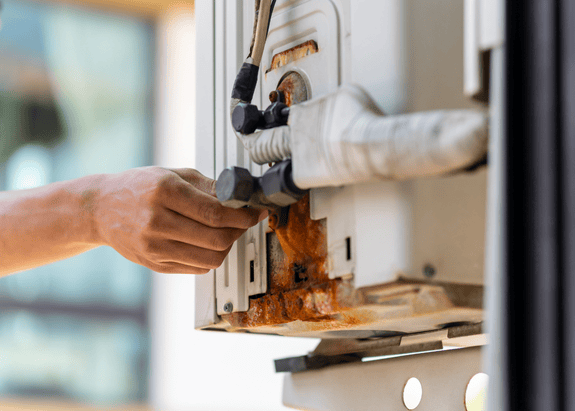
If the fan isn’t spinning, it could be a dead capacitor or frozen motor. In that case, turn the unit off and call an HVAC technician before the issue gets worse.
-
Scan Your Vents and Ductwork
Blocked or closed supply and return vents can create the illusion of a dead system when it’s just struggling to breathe.
What to do:
- Ensure no vents are blocked by furniture or curtains
- Open all registers, even in unused rooms
- Inspect exposed ductwork for disconnections or leaks
Pro tip: If airflow is uneven or certain rooms are constantly warmer, it might be time to schedule duct cleaning or balancing.
-
Check the Drain Line & Pan
A clogged condensate drain line can cause your system to shut down or leak water inside your home. If your AC is off and there’s water pooling near the indoor unit, this might be your issue.
Fix:
- Locate the drain pan and check for water
- Use a wet/dry vacuum to clear blockages in the drain line
- Clean the pan with mild soap to prevent mold or algae buildup
Some systems come with a float switch that disables your unit to avoid overflow — another reason to keep it clean.
-
AC Still Not Turning On? Here Are Other Possibilities
💥 Capacitor or Motor Failure
If your AC makes clicking noises, turns on and off rapidly, or won’t start despite power, the capacitor might be fried. These components require professional handling — they can store enough power to shock you even when the system is off.
❄️ Low Refrigerant
Refrigerant doesn’t get “used up.” If it’s low, you likely have a leak. Signs include:
- Ice on coils
- Hissing sounds
- AC running but not cooling
Only certified techs can fix this due to refrigerant handling regulations in Canada.
Also read our latest guide on refrigerant bans and phaseouts in Canada for the most accurate, up-to-date information on R410A, R22, and eco-friendly alternatives—straight from your trusted Ontario HVAC experts.
🧓 Old System Woes
If your AC is over 10–15 years old, breaks down often, or causes monthly arguments with your hydro bill, it might be nearing retirement. Consider an upgrade — today’s systems are far more efficient and come with rebate incentives in Ontario.
When to Call a Professional HVAC Technician
If you’ve gone through the checklist and your air conditioning still won’t turn on, here’s when to call for backup:
- Burning smells, sparks, or popping noises
- System turns on and off every few minutes (short cycling)
- Uneven cooling across rooms
- Indoor humidity levels remain high
- You’re sweating and swearing with no cold air in sight
At this point, a certified tech can check your compressor, wiring, control board, and run a full system diagnostic. And yes, they can even fix that hissing noise you’ve been ignoring.
Prevent It from Happening Again
The best emergency is the one you never have. Here’s how to keep your system in top shape:
- Change your filters regularly
- Schedule annual AC tune-ups
- Keep your outdoor unit clean
- Act on small issues before they snowball
- Consider heat pump maintenance if you’ve got a dual system
Want to go one step further? Learn about our HVAC maintenance plans in Ontario that keep your cooling system humming all season long.
Final Thoughts: Don’t Sweat It (Literally)
Air conditioning systems can act up at the worst times — but armed with this guide, you’re already miles ahead of most sweaty homeowners. While some fixes are simple, others require a trained professional to prevent costly or dangerous outcomes.
If you’ve checked the usual suspects and your AC still won’t cooperate, don’t gamble with your comfort. Reach out to a licensed HVAC expert for professional air conditioner repair in Ontario.
- Why is my AC running but not cooling my house?
This is often caused by a clogged air filter, frozen evaporator coils, or low refrigerant levels. Check the filter first before calling a professional HVAC technician. - What should I check if my AC won’t turn on?
Start with the thermostat settings, circuit breakers, air filter, and power supply. If all seem fine, the issue may be with the capacitor, motor, or control board. - Can a dirty filter cause my air conditioner to stop working?
Yes, a dirty air filter can restrict airflow, cause overheating, freeze coils, and even trigger a system shutdown. Replace filters every 1–3 months. - Why does my AC keep turning on and off frequently?
This “short cycling” could be due to a refrigerant leak, faulty thermostat, or an oversized system. It reduces efficiency and needs professional diagnosis. - When should I call a professional for AC problems?
Call a pro if your AC is leaking water, making unusual noises, constantly tripping breakers, or not responding after basic troubleshooting. - How often should I schedule AC maintenance in Ontario?
For optimal performance, schedule professional HVAC maintenance once a year, ideally in spring before peak cooling season.

HVAC Tips & Updates
Get seasonal maintenance reminders

Why Choose Us
-

4.9/5.0 Rating
500+ Reviews
-

Licensed & Insured
Fully Certified
-

Award Winning
2025 Excellence
Search Articles



 1-866-438-5442