
 Find Your location


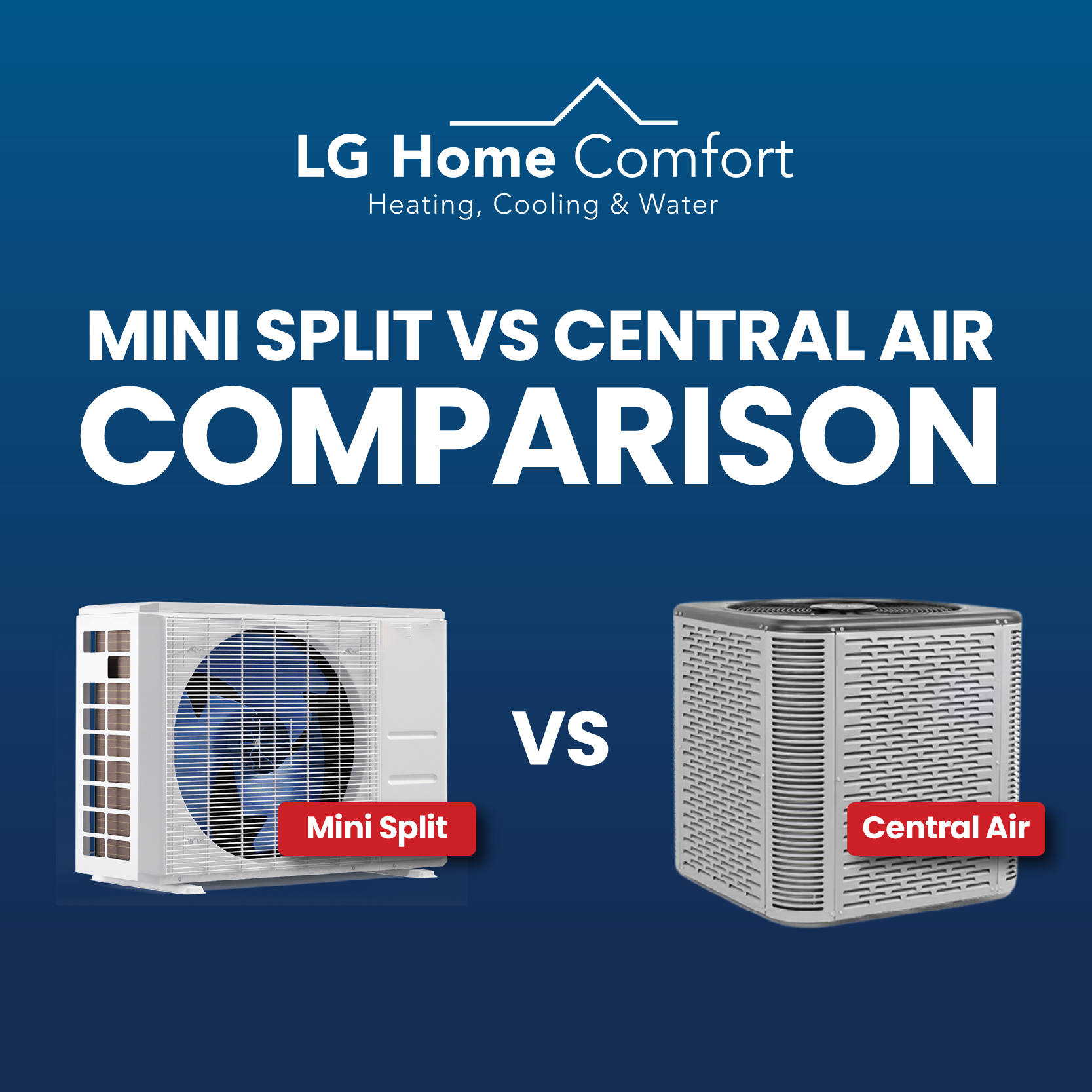

Table of Contents
Ductless mini splits systems vs. central air conditioning—if you’re a homeowner in Ontario trying to decide which is better, you’re not alone. With rising energy costs, evolving HVAC technology, and government rebates for energy-efficient systems, choosing the right air conditioner is more important than ever.
At LG Home Comfort, we help homeowners across Ontario—from Toronto to Ottawa—find their perfect home cooling solution. In this comprehensive guide, we’ll compare ductless mini split air conditioners with central air conditioning systems, breaking down everything from installation costs to energy efficiency, aesthetics, and indoor air quality. Plus, we’ll answer the top HVAC-related questions Canadians are searching online.
What Is a Ductless Mini Splits AC System?
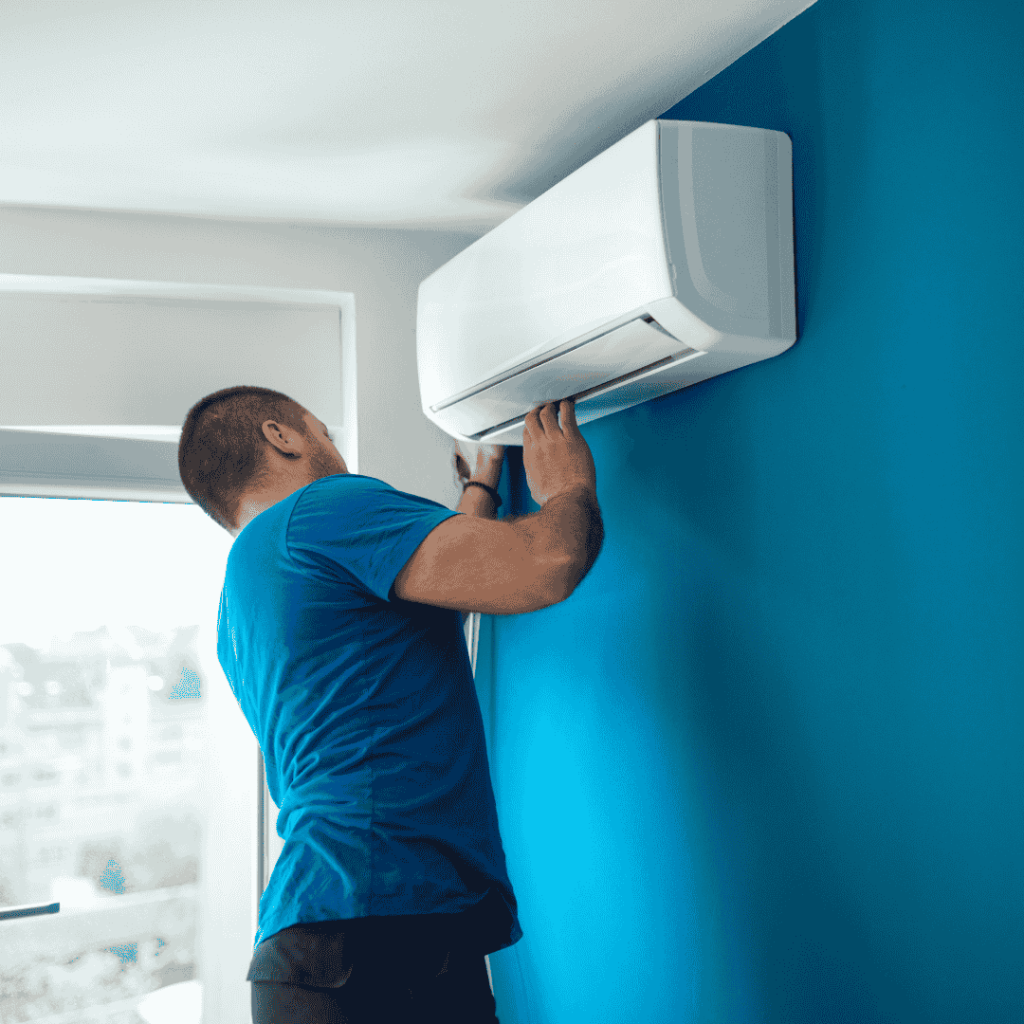
A ductless mini split AC system consists of two main components: an outdoor compressor and one or more indoor air handling units, connected by a small refrigerant line. These systems provide both cooling and heating, making them a year-round HVAC solution for homeowners looking for targeted temperature control.
Mini splits are ideal for:
- Homes without existing ductwork
- Older properties or heritage homes
- Garages, home offices, and room additions
- Multi-family units or apartment buildings
- Homes that require zoned cooling
The best part? They don’t require messy duct installations. A single 3-inch hole is enough to connect the indoor and outdoor units.

What Is Central Air Conditioning?
Central air conditioners are traditional cooling systems that push cool air through a network of ducts. They consist of an outdoor condenser, an indoor air handler or furnace, and extensive ductwork that delivers air to every room through vents.
Central AC systems are best for:
- Homes with pre-installed ductwork
- Large homes (2,000+ square feet)
- Homeowners looking for an invisible HVAC setup
- Families who prefer a whole-home cooling approach
Ductless Mini Split vs Central Air: Head-to-Head Comparison
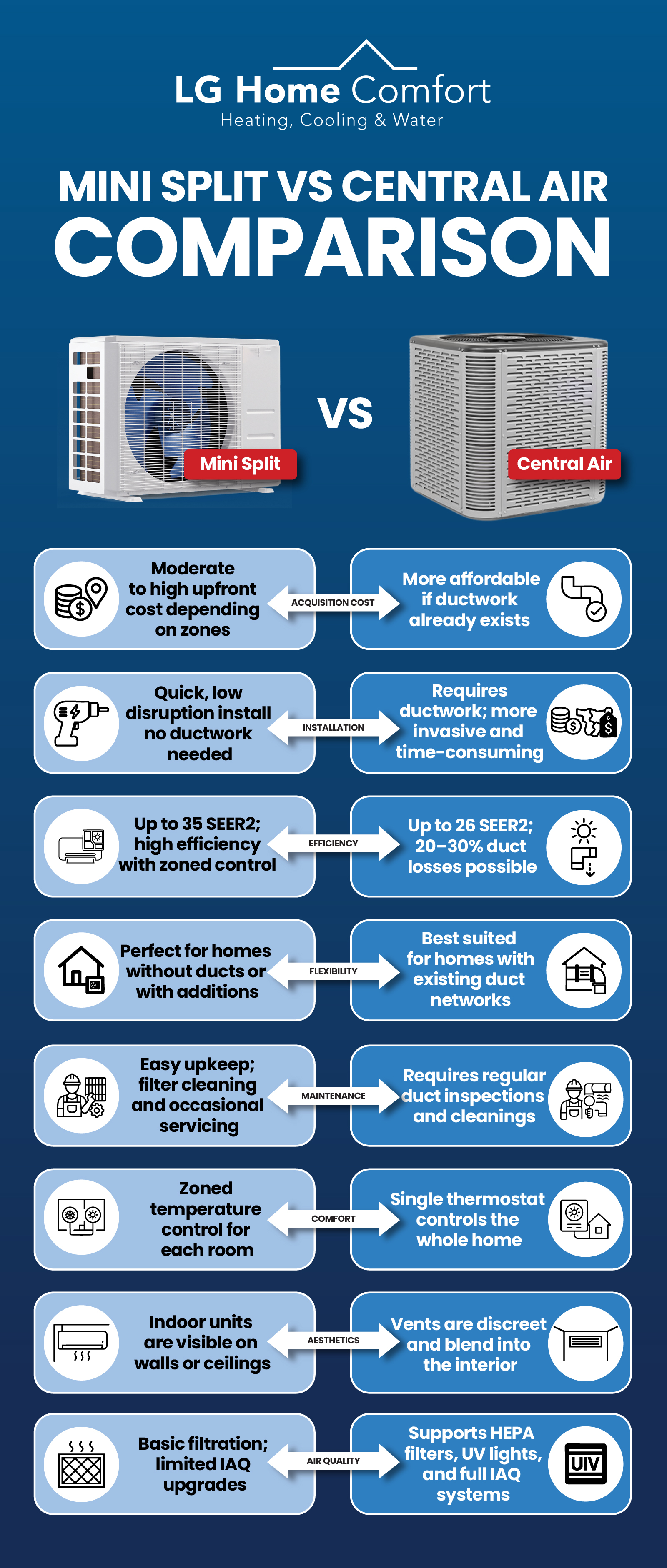
| Feature | Mini Split AC Systems | Central Air Conditioners |
|---|---|---|
| Ductwork Needed | No | Yes |
| Installation Time | Quick, minimally invasive | Longer, especially if ducts needed |
| Energy Efficiency | Up to 35 SEER2 | Up to 26 SEER2 |
| Noise Level | Whisper-quiet (20 dB) | Quiet but louder (50–60 dB) |
| Aesthetics | Visible wall/ceiling units | Discreet, hidden in vents |
| Zoning Options | Easy, built-in zoning | Requires duct upgrades |
| Air Quality | Moderate, limited filtration | High, with HEPA/UV upgrades |
| Installation Cost | Affordable without ducts | Higher with duct install |
| Heating Option | Yes (heat pump technology) | Yes, with heat pump pairing |
When Is a Mini Split Air Conditioner Better?
In many Ontario homes, especially older properties in areas like Hamilton or Guelph, ductwork simply doesn’t exist. Tearing up walls to install ducts isn’t always practical—or affordable.
Mini split systems are a game-changer in these scenarios:
- Older homes without central HVAC infrastructure
- New home additions or garage conversions
- Cottages and seasonal homes
- Homeowners who want to save on energy bills
- Rooms with inconsistent temperatures
These systems also function as energy-efficient heat pumps, providing supplemental heating in shoulder seasons.
When Does Central Air Make More Sense?
If your Ontario home already has ductwork—perhaps from a previous furnace or AC system—then upgrading to a new high-efficiency central air conditioner could be more economical. Plus, you’ll benefit from whole-home cooling with minimal visual impact.
Central AC works best for:
- Modern homes with built-in ducts
- Large properties over 2,500 sq. ft.
- Homeowners prioritizing aesthetics
- People with respiratory issues needing premium air filtration
You can also improve indoor air quality with HEPA filters, UV light purifiers, and advanced filtration systems.
Energy Efficiency and Cost Breakdown
Mini Splits:
- Energy ratings up to 35 SEER2
- Reduced energy loss due to direct room cooling
- Save money by turning off units in unused rooms
Central AC:
- Efficiency up to 26 SEER2 with newer models
- Up to 30% energy loss through unsealed or poorly routed ducts
- Efficient if using a smart thermostat and zoning dampers
Upfront Costs:
- Mini split systems range from $3,000–$12,000, depending on the number of indoor units
- Central AC installations range from $3,000–$15,000+, especially if ductwork is required
Remember, government rebates and energy incentives in Ontario can reduce your installation cost significantly—especially for ENERGY STAR® certified HVAC systems.
So Which One Is Best for You?
The answer depends on your:
- Budget
- Existing ductwork
- Home size and layout
- Energy efficiency goals
- Air quality preferences
Don’t worry—you don’t have to figure it all out alone. LG Home Comfort offers free in-home consultations and expert guidance across Ontario.
Why LG Home Comfort Is Ontario’s Top Choice
With years of experience serving Ontario families, LG Home Comfort delivers unmatched value:
- Certified installation experts for both ductless and central AC
- Rebates available for heat pumps and high-efficiency upgrades
- Transparent pricing with zero hidden fees
- 24/7 emergency service
- Free consultation and sizing assessments
We install the best HVAC brands in Canada, and our team is ready to guide you every step of the way.
FAQs
- Is a ductless mini split more efficient than central air in Canada?
Yes, ductless mini split systems are generally more energy-efficient, especially when heating and cooling individual rooms. In Canada’s climate, their zoned control helps reduce energy waste.
- What is the average cost of ductless air conditioner installation in Ontario?
The average installation cost for a single-zone mini split system ranges from $3,000 to $5,500. Multi-zone systems can cost upwards of $10,000, but rebates can help offset expenses.
- Can I use a mini split system to heat my home during Ontario winters?
Yes, but only in mild winters or as a supplement. Most mini split heat pumps function efficiently down to about -7°C. For colder climates, pair them with a backup heating system.
- Which is better for indoor air quality: central air or ductless?
Central air systems are better for indoor air quality because they support HEPA filtration, whole-home purifiers, and UV sanitation. Ductless systems offer basic filtration.
- How long do central air and mini split systems last?
On average, central air systems last 15–20 years with maintenance. Ductless mini splits can last up to 20 years if cleaned and serviced regularly.

HVAC Tips & Updates
Get seasonal maintenance reminders

Why Choose Us
-

4.9/5.0 Rating
500+ Reviews
-

Licensed & Insured
Fully Certified
-

Award Winning
2025 Excellence
Search Articles



 1-866-438-5442